Archive resale
Resale Operations
A suite of operational products that enables enterprise brands to run resale programs, including warehouse operations, customer support, merchandising, and inventory intake.

Building a Resale System
Unlike traditional e-commerce, resale operations require managing unique inventory, multiple sourcing models, dynamic listing states, and coordination across brands, warehouses, and customer support. Each item follows a distinct process – from intake and merchandising to purchase, fulfillment, and post-purchase support – demanding systems that remain synchronized throughout.
Each product I designed supported a different part of the resale flow: Admin managed marketplace configuration and merchandising, In-Store Trade-In brought inventory into the system, WMS (Warehouse Management System) tracked inventory through warehouse operations and fulfillment, and CX (Customer Experience) provided support agents with a unified view of customers, orders, listings, and trade-ins. While each product solved distinct operational challenges, they functioned as a connected system, sharing business logic across all touchpoints.
Project Overview
About archive resale
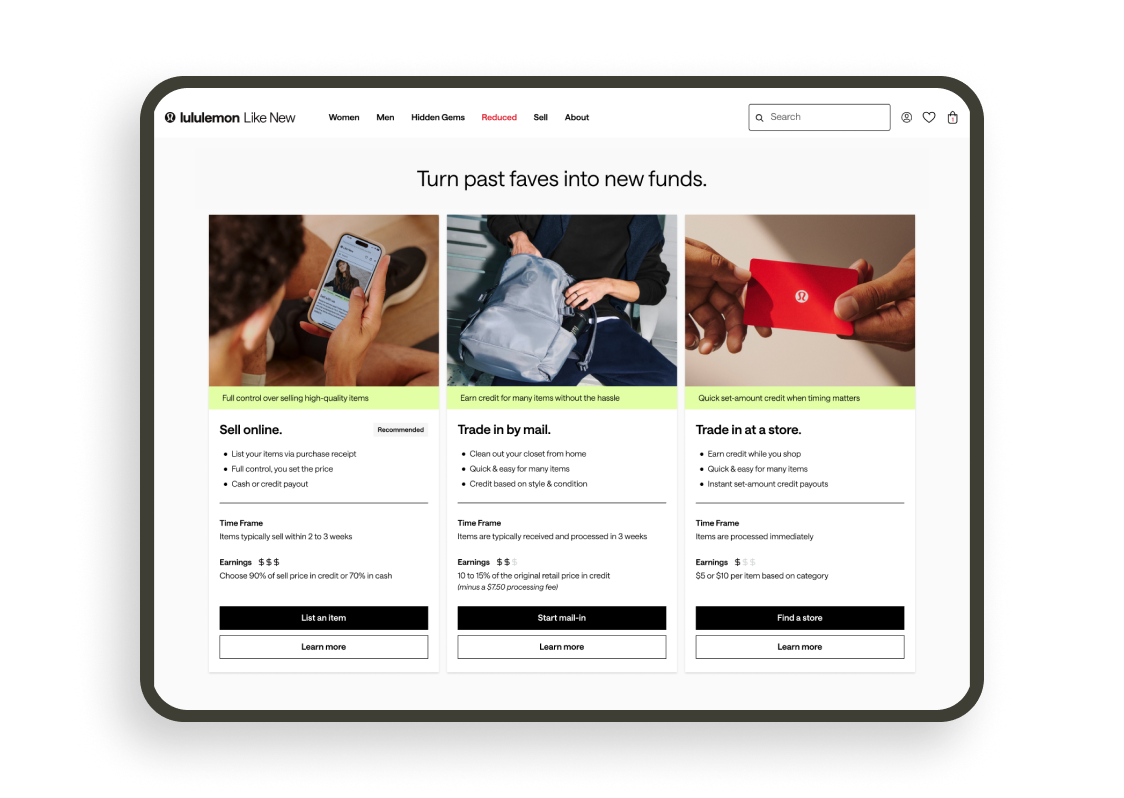
Archive is a resale platform that enables enterprise brands to launch and operate branded resale programs. Beyond the customer marketplace, the platform includes operational tools that support inventory, fulfillment, merchandising, and customer support.
the problem
Traditional ecommerce systems assume that products move from a warehouse to a customer along a predictable path. Resale introduces a fundamentally different model: inventory arrives from multiple sources, every item is unique, listings constantly change, and fulfillment varies depending on where an item originated.
As Archive partnered with enterprise brands like IKEA and Peloton, that complexity grew – each partner introduced new operational workflows, inventory models, and business rules that existing systems couldn't support.
MY ROLE
I was the sole designer across Archive's business-facing platforms – WMS, CX, In-Store Trade-In, and Admin – partnering closely with Product, Engineering, and enterprise brand teams to translate ambiguous, fast-changing requirements into workflows built for expert, high-volume users.
In addition to designing interfaces, I defined complex operational systems by documenting business logic, mapping end-to-end workflows, creating shared design patterns, and producing implementation-ready specifications to reduce ambiguity for Product and Engineering. My role often involved making complex system behavior understandable for both end users and internal teams.
The Platform
Admin
Marketplace Configuration

Marketplace
CustomerStorefront

WMS
Inventory & Fulfillment

In-StoreTrade-In
Inventory Intake


CX App
Customer Operations
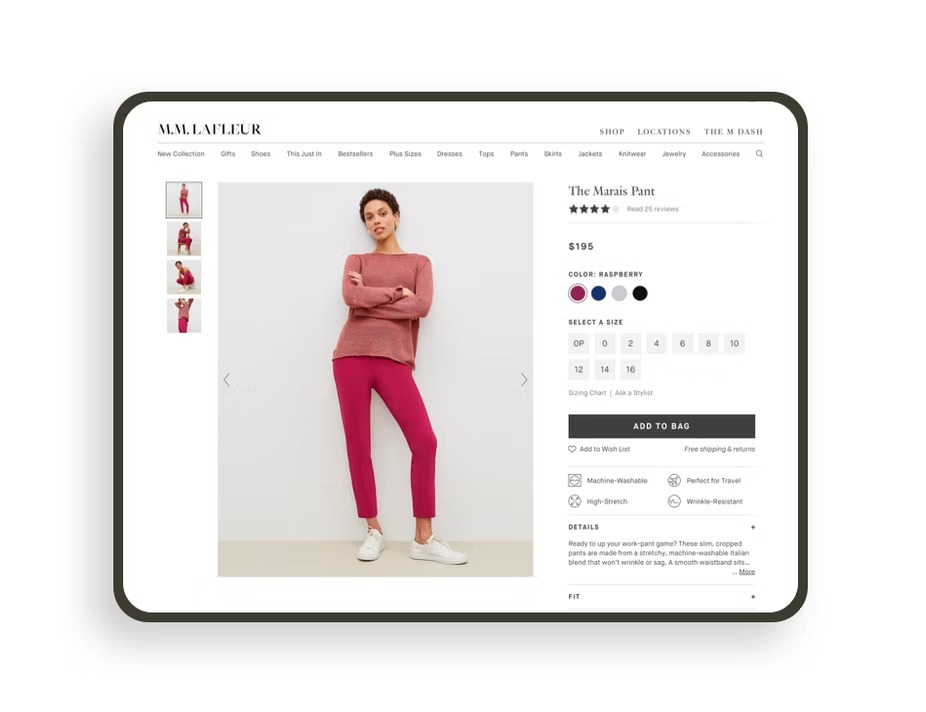
While each product served a distinct operational need, they were designed to work as one connected platform, sharing data and business logic across every stage of the resale journey:
- Admin configured what appeared on the marketplace
- In-Store Trade-In brought customer inventory into the system
- WMS managed inventory through check-in, storage, and fulfillment
- CX unified listings, orders, and trade-ins so support teams could resolve customer issues with complete operational context
The Operational Ecosystem
This connected suite of operational products supports every stage of the resale lifecycle. While Admin is covered in a separate case study, this page highlights the CX, WMS, and In-Store Trade-In products that drive daily operations.
Customer Experience
Many of the hardest design decisions weren't about interface, they were about idenitfying users’ mental models and defining how the product should behave.
Warehouse Management
Manage inventory intake, repairs, storage, and fulfillment for unique resale inventory as it moves through the warehouse.
In-Store Trade-In
Many of the hardest design decisions weren't about interface, they were about idenitfying users’ mental models and defining how the product should behave.
Admin
Enable merchandising teams to manage products, listings, pricing, collections, and resale program configuration.
View Project

Customer Experience App (CX)
Marketplace Fulfillment Flow
The Problem
- Support agents had to investigate orders, listings, trade-ins, gift cards, and returns across multiple disconnected systems
- As I dug into the problem, it became clear the real challenge wasn't surfacing data, it was that the underlying order logic had never been clearly defined
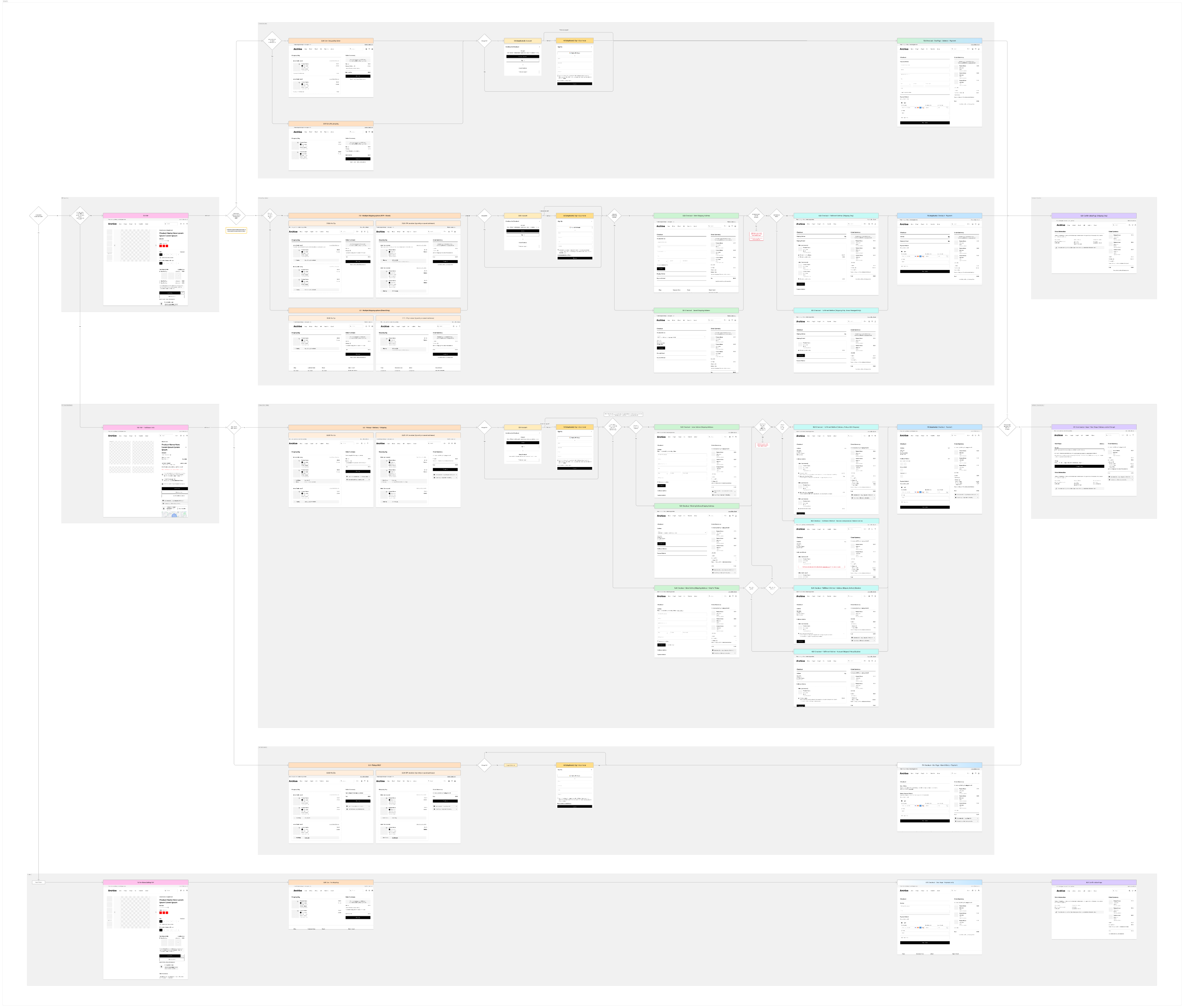
- Unlike traditional e-commerce, resale orders could follow five different fulfillment paths depending on where inventory originated, each with unique operational states and timelines
- Before designing the support experience, I mapped these fulfillment models and established a shared framework for how orders moved through the marketplace
The solution
- Mapped the end-to-end order model across the marketplace – including PDP, cart, checkout, and post-purchase experiences – to establish shared business logic
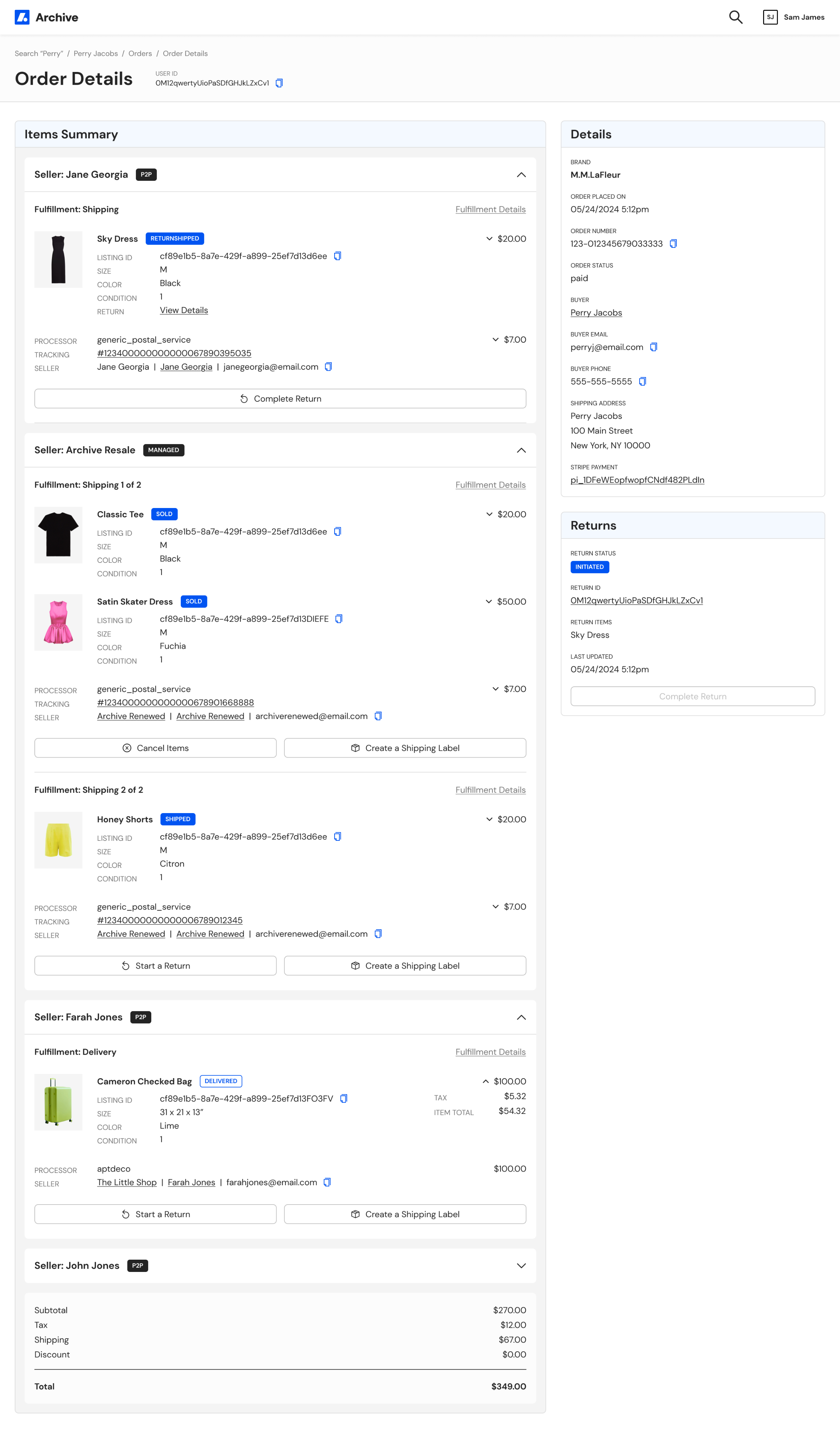
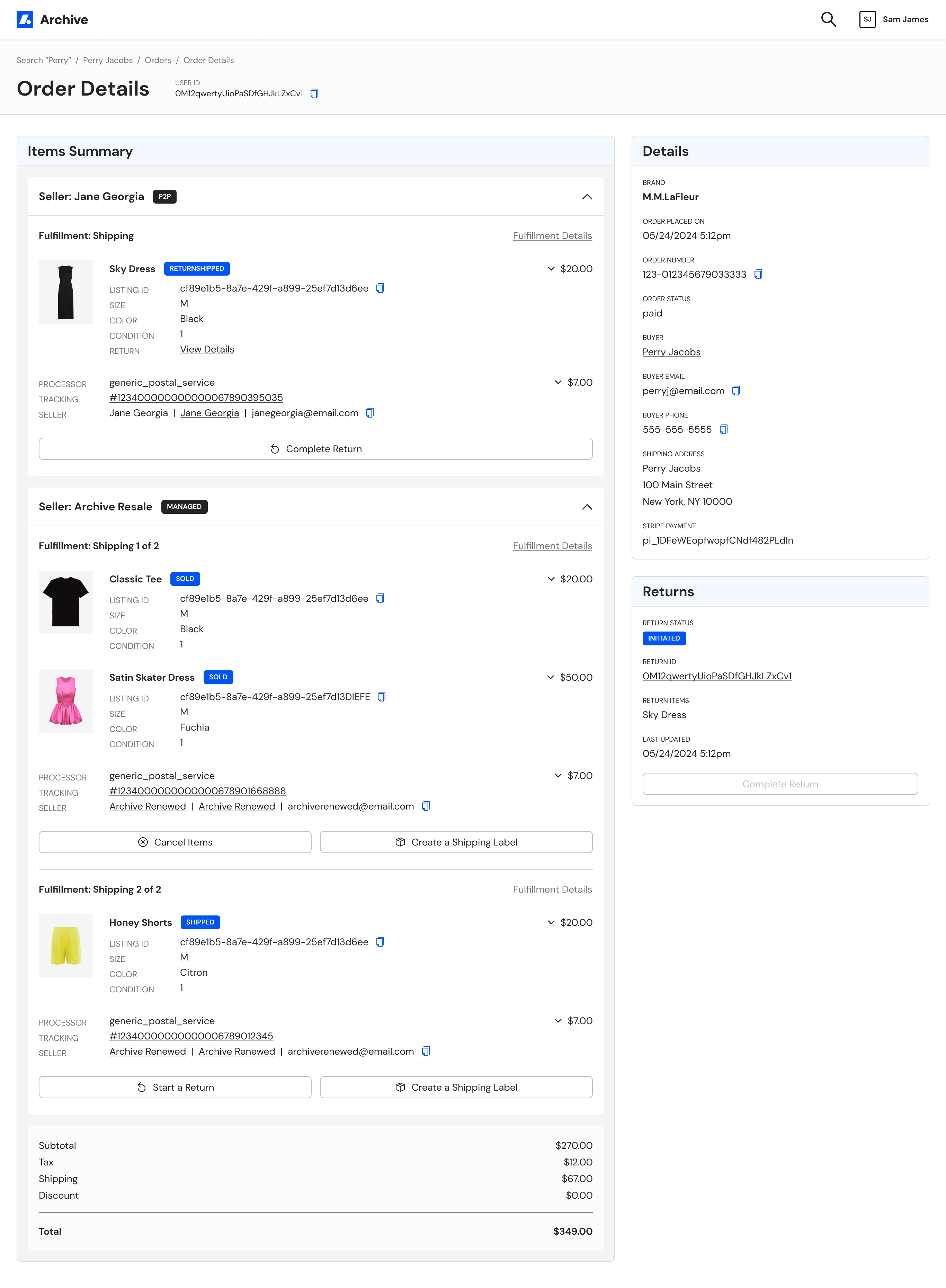
- Redesigned the CX Orders experience, restructuring information around how support agents investigate cases rather than how customers shop
- Unified operational context by surfacing order history, listing details, fulfillment status, seller information, gift cards, and returns in one place
- Designed the Returns experience, building on earlier Trade-In and Returns workflow documentation to provide a foundation for future implementation
- Created system documentation that was later shared company-wide to help Product and Engineering align on complex operational workflows
Warehouse Management (WMS)
The problem
- Third-party warehouse partners managed every stage of the resale lifecycle, from inventory intake through fulfillment, while handling unique items where no two units were exactly alike
- As operations scaled, warehouse workflows became increasingly complex, but the supporting tools failed to keep pace
- Improving efficiency meant designing for high-volume operations without sacrificing the flexibility required for one-of-a-kind inventory
The solution
- Partnered weekly with our Head of Resale Operations and an engineering lead to identify pain points across multiple warehouse partners, solve operational problems collaboratively, and document scalable design patterns as the platform evolved
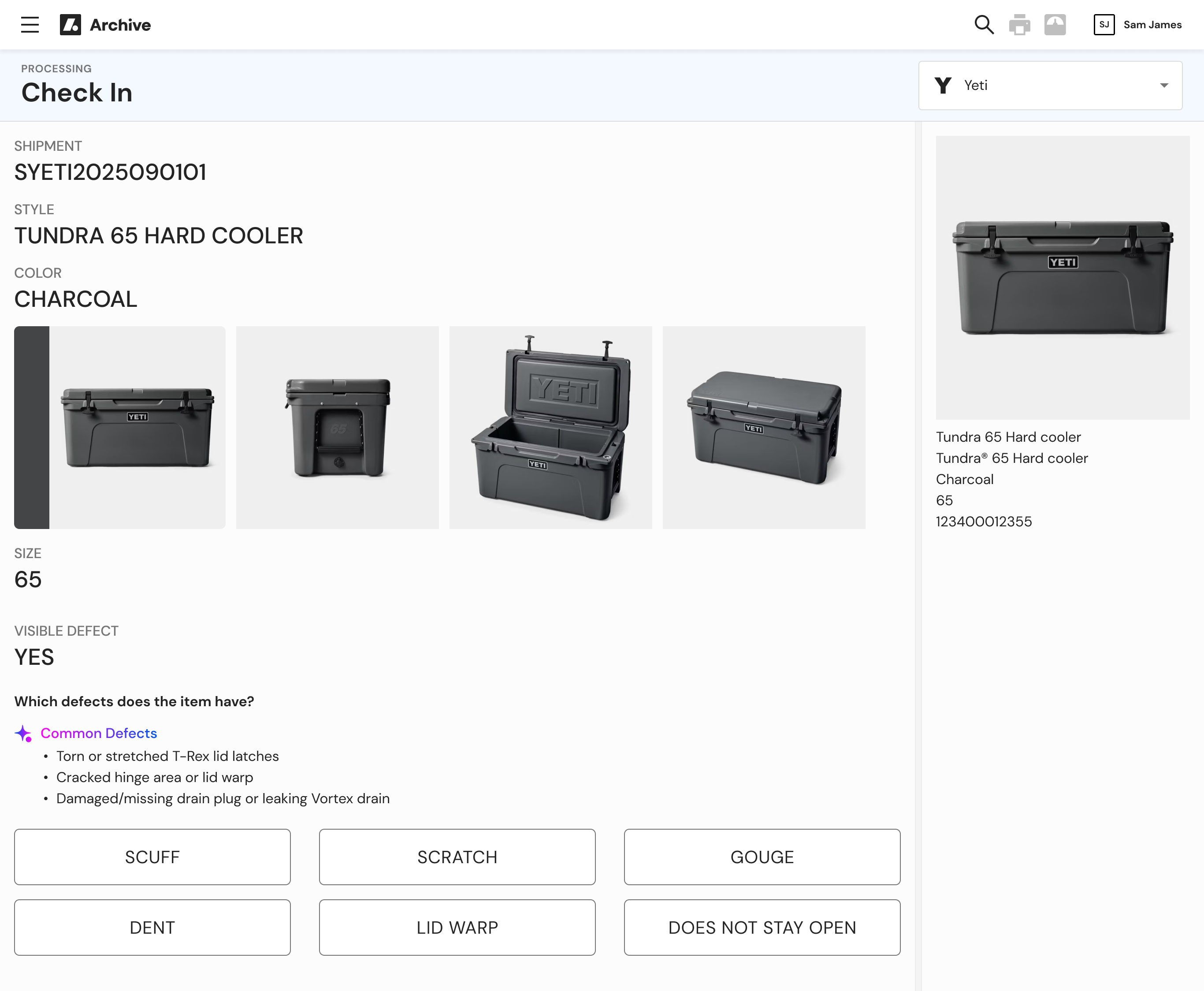
- Redesigned the photo management experience, making it easier to upload, organize, and review item photography during inventory intake
- Improved warehouse picking workflows by introducing item photos and clearer information hierarchy to reduce errors and speed fulfillment
- Designed a more flexible packing experience to support multi-box shipments and more complex fulfillment scenarios
- Integrated AI guidance into key workflows, providing contextual tips and operational support without disrupting workers' flow
- Led the WMS visual refresh as part of Archive's company-wide rebrand
Admin App
The Problem
- Traditional merchandising tools assume stable inventory: one product, one price, one stock count
- Resale introduced a fundamentally different model where a single product could have many unique listings, each with its own seller, condition, price, and lifecycle
- Internal Brand Success teams and enterprise partners needed flexible tools to manage this complexity independently, without relying on Engineering for every change
The solution
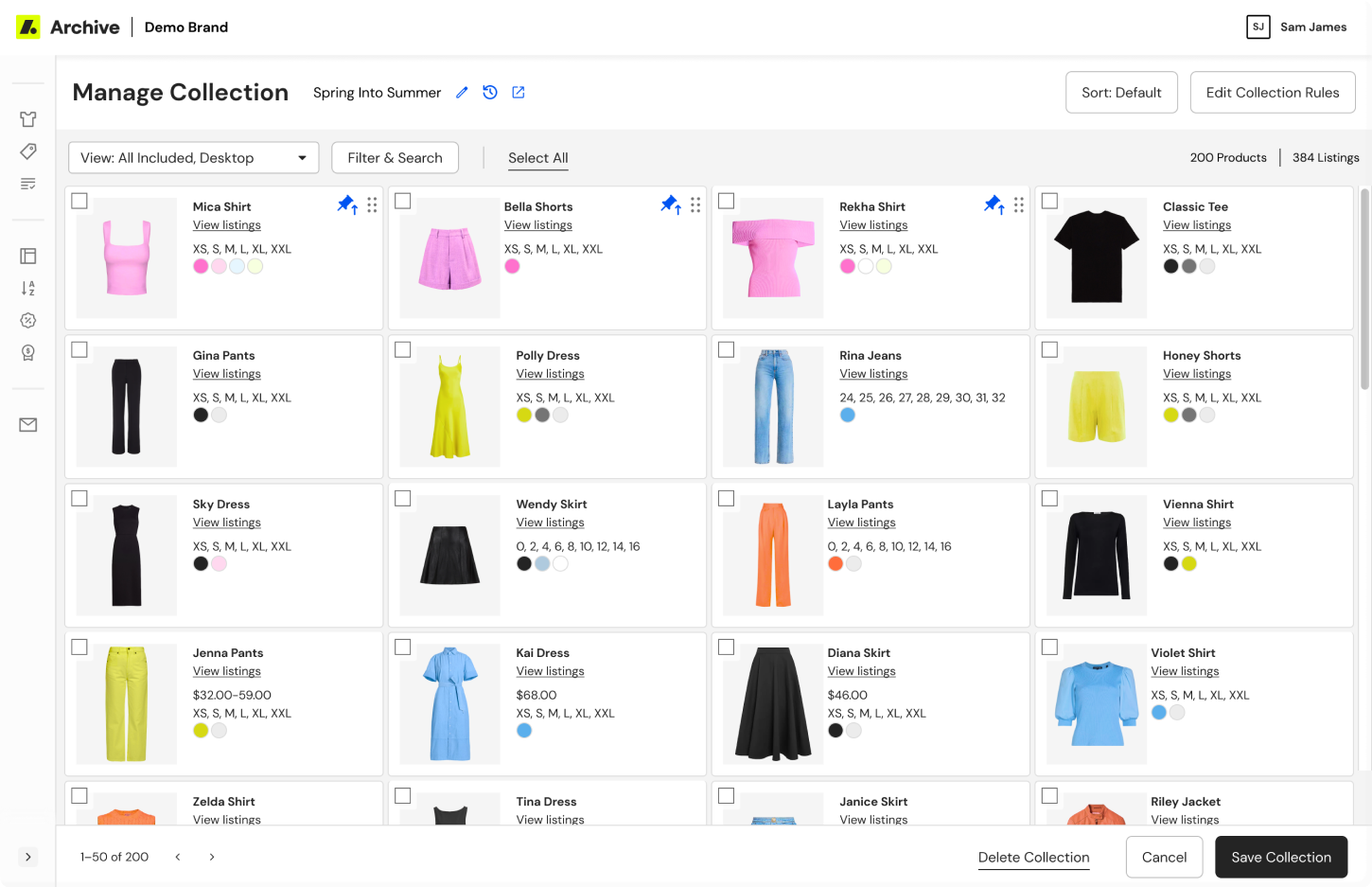
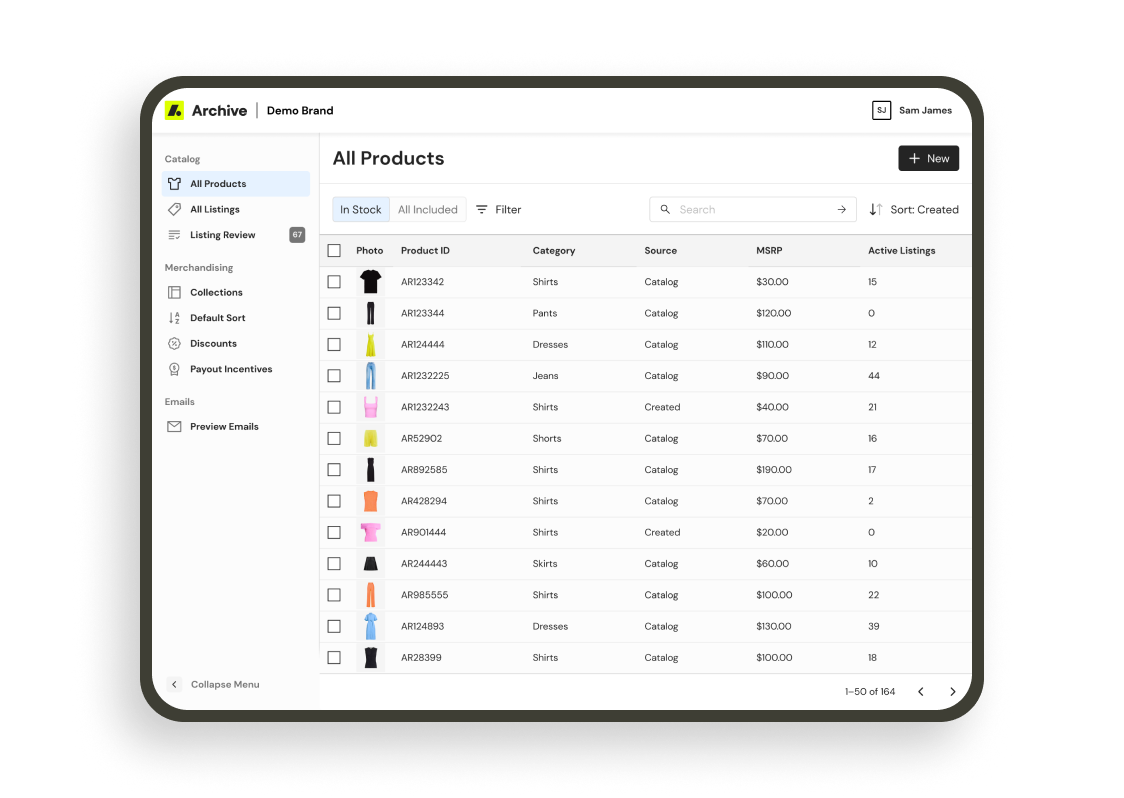
- Designed a merchandising admin platform that evolved through strategic phases: Collections, Listings, Listing Review, and Discounts & Seller Incentives
- Enabled merchandising teams to manage products, listings, merchandising, pricing, and seller incentive programs independently
- Established the shared visual language for Archive's operational ecosystem through the company-wide rebrand of Admin, WMS, and CX
Explore the full Admin case study for details on platform strategy, user research, phased rollout, and design decisions.

In-Store Trade-In
The Problem
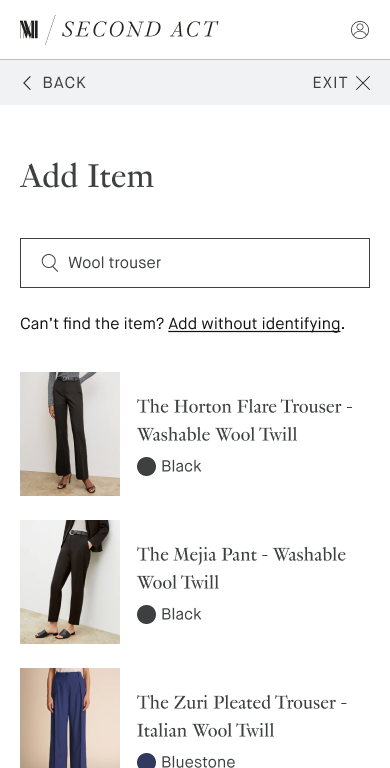
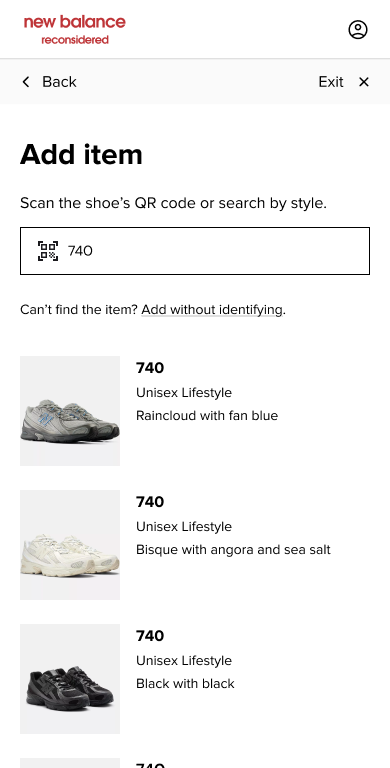
- Retail associates – not resale experts – needed to evaluate customer trade-ins quickly and confidently while balancing speed, accuracy, and fraud prevention
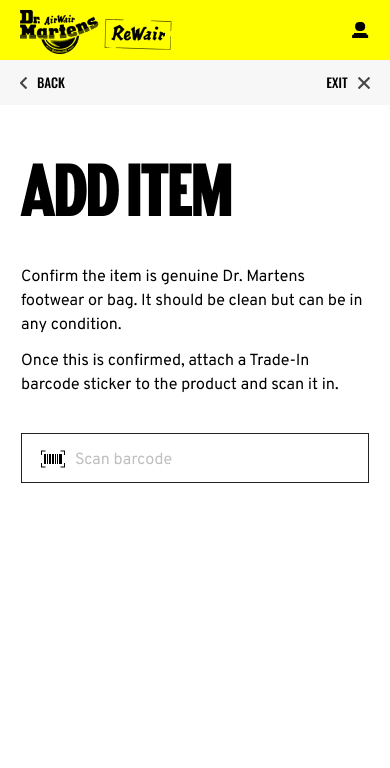
- The challenge extended beyond the store experience: every enterprise brand had different operational requirements around item identification, available hardware, associate responsibilities, customer compensation, and warehouse handoff
- The experience needed to be flexible enough to support each partner’s unique model while feeding a consistent inventory pipeline downstream
The solution
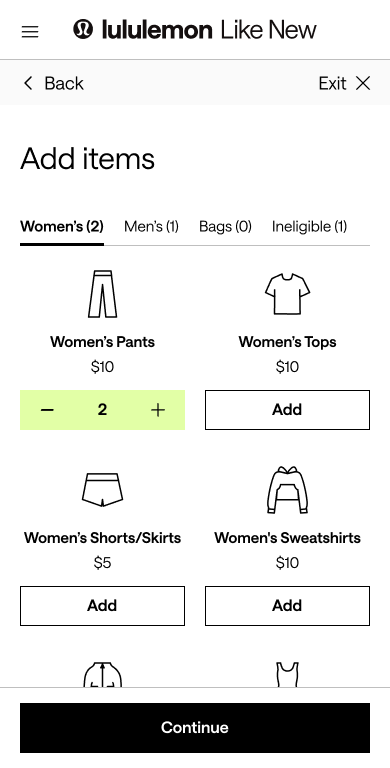
- Designed a guided trade-in experience that helped associates identify customer items and generate estimated trade-in values with confidence
- Built configurable workflows that adapted to each brand's operational model, including item identification, available hardware, associate responsibilities, labeling, and customer compensation
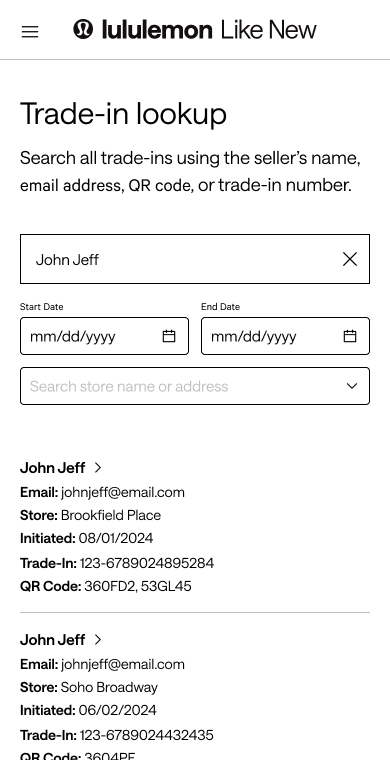
- Added customer trade-in history to help associates identify repeat or potentially fraudulent trade-ins before accepting inventory
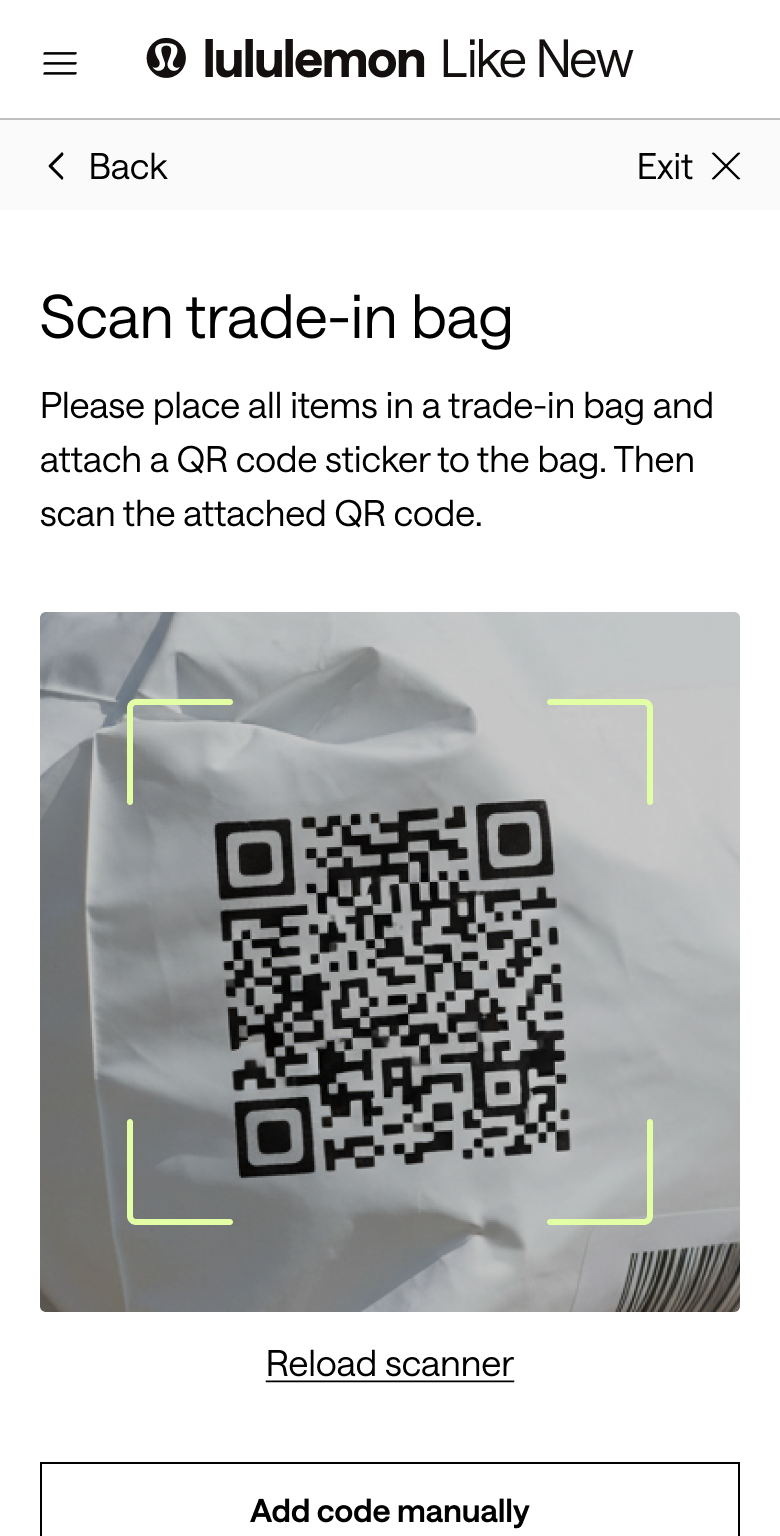
- Connected store and warehouse experiences by generating the necessary information for packaging, shipping, and warehouse intake, ensuring accepted items entered the same inventory pipeline as all other inbound products
Designing for Complexity
Systems Thinking
Mapped complex operational workflows across five fulfillment models, creating a shared framework that aligned the marketplace, CX, WMS, and supporting systems around the same business logic. Turned ambiguous operational requirements into models that Product, Engineering, and Design could build from together.
Operational UX
Designed for users performing high-volume, repetitive work, balancing speed with error prevention across warehouse operations, customer support, and in-store trade-in workflows.
Scalable Systems
Built design foundations applicable beyond individual features, including shared components, flow documentation, implementation specifications, and a company-wide visual rebrand across Admin, WMS, and CX. Adapted the system for each environment, from high-contrast functional interfaces to flexible enterprise branding.
Cross-Functional Partnership
Partnered closely with Product, Engineering, and brands to navigate evolving requirements, align on complex business logic, and deliver scalable solutions across a rapidly growing platform.
Archive resale
Resale Operations
A suite of operational products that enables enterprise brands to run resale programs, including warehouse operations, customer support, merchandising, and inventory intake.

Building a Resale System
Unlike traditional e-commerce, resale operations require managing unique inventory, multiple sourcing models, dynamic listing states, and coordination across brands, warehouses, and customer support. Each item follows a distinct process – from intake and merchandising to purchase, fulfillment, and post-purchase support – demanding systems that remain synchronized throughout.
Each product I designed supported a different part of the resale flow: Admin managed marketplace configuration and merchandising, In-Store Trade-In brought inventory into the system, WMS (Warehouse Management System) tracked inventory through warehouse operations and fulfillment, and CX (Customer Experience) provided support agents with a unified view of customers, orders, listings, and trade-ins. While each product solved distinct operational challenges, they functioned as a connected system, sharing business logic across all touchpoints.
Project Overview
About archive resale
Archive is a resale platform that enables enterprise brands to launch and operate branded resale programs. Beyond the customer marketplace, the platform includes operational tools that support inventory, fulfillment, merchandising, and customer support.
the problem
Traditional ecommerce systems assume that products move from a warehouse to a customer along a predictable path. Resale introduces a fundamentally different model: inventory arrives from multiple sources, every item is unique, listings constantly change, and fulfillment varies depending on where an item originated.
As Archive partnered with enterprise brands like IKEA and Peloton, that complexity grew – each partner introduced new operational workflows, inventory models, and business rules that existing systems couldn't support.
MY ROLE
I was the sole designer across Archive's business-facing platforms – WMS, CX, In-Store Trade-In, and Admin – partnering closely with Product, Engineering, and enterprise brand teams to translate ambiguous, fast-changing requirements into workflows built for expert, high-volume users.
In addition to designing interfaces, I defined complex operational systems by documenting business logic, mapping end-to-end workflows, creating shared design patterns, and producing implementation-ready specifications to reduce ambiguity for Product and Engineering. My role often involved making complex system behavior understandable for both end users and internal teams.
The Platform
Admin
Marketplace Configuration
Marketplace
Customer Storefront

WMS
Inventory & Fulfillment
In-Store Trade-In
Inventory Intake


CX App
Customer Operations
While each product served a distinct operational need, they were designed to work as one connected platform, sharing data and business logic across every stage of the resale journey:
- Admin configured what appeared on the marketplace
- In-Store Trade-In brought customer inventory into the system
- WMS managed inventory through check-in, storage, and fulfillment
- CX unified listings, orders, and trade-ins so support teams could resolve customer issues with complete operational context
The Operational Ecosystem
This connected suite of operational products supports every stage of the resale lifecycle. While Admin is covered in a separate case study, this page highlights the CX, WMS, and In-Store Trade-In products that drive daily operations.
Customer Experience
Equip support teams with unified visibility into customers’ listings, orders, and trade-ins to investigate issues and resolve cases efficiently.
Warehouse Management
Manage inventory intake, repairs, storage, and fulfillment for unique resale inventory as it moves through the warehouse.
In-Store Trade-In
Guide store associates through trade-in intake, bringing customer inventory into the resale ecosystem.
Admin
Enable merchandising teams to manage products, listings, pricing, collections, and resale program configuration.
View Project
Customer Experience App (CX)
Marketplace Fulfillment Flow
The Problem
- Support agents had to investigate orders, listings, trade-ins, gift cards, and returns across multiple disconnected systems
- As I dug into the problem, it became clear the real challenge wasn't surfacing data, it was that the underlying order logic had never been clearly defined
- Unlike traditional e-commerce, resale orders could follow five different fulfillment paths depending on where inventory originated, each with unique operational states and timelines
- Before designing the support experience, I mapped these fulfillment models and established a shared framework for how orders moved through the marketplace
The solution
- Mapped the end-to-end order model across the marketplace – including PDP, cart, checkout, and post-purchase experiences – to establish shared business logic
- Redesigned the CX Orders experience, restructuring information around how support agents investigate cases rather than how customers shop
- Unified operational context by surfacing order history, listing details, fulfillment status, seller information, gift cards, and returns in one place
- Designed the Returns experience, building on earlier Trade-In and Returns workflow documentation to provide a foundation for future implementation
- Created system documentation that was later shared company-wide to help Product and Engineering align on complex operational workflows
Warehouse Management (WMS)
The problem
- Third-party warehouse partners managed every stage of the resale lifecycle, from inventory intake through fulfillment, while handling unique items where no two units were exactly alike
- As operations scaled, warehouse workflows became increasingly complex, but the supporting tools failed to keep pace
- Improving efficiency meant designing for high-volume operations without sacrificing the flexibility required for one-of-a-kind inventory
The solution
- Partnered weekly with our Head of Resale Operations and an engineering lead to identify pain points across multiple warehouse partners, solve operational problems collaboratively, and document scalable design patterns as the platform evolved
- Redesigned the photo management experience, making it easier to upload, organize, and review item photography during inventory intake
- Improved warehouse picking workflows by introducing item photos and clearer information hierarchy to reduce errors and speed fulfillment
- Designed a more flexible packing experience to support multi-box shipments and more complex fulfillment scenarios
- Integrated AI guidance into key workflows, providing contextual tips and operational support without disrupting workers' flow
- Led the WMS visual refresh as part of Archive's company-wide rebrand
Admin App
The Problem
- Traditional merchandising tools assume stable inventory: one product, one price, one stock count
- Resale introduced a fundamentally different model where a single product could have many unique listings, each with its own seller, condition, price, and lifecycle
- Internal Brand Success teams and enterprise partners needed flexible tools to manage this complexity independently, without relying on Engineering for every change
The solution
- Designed a merchandising admin platform that evolved through strategic phases: Collections, Listings, Listing Review, and Discounts & Seller Incentives
- Enabled merchandising teams to manage products, listings, merchandising, pricing, and seller incentive programs independendtly
- Established the shared visual language for Archive's operational ecosystem through the company-wide rebrand of Admin, WMS, and CX
Explore the full Admin case study for details on platform strategy, user research, phased rollout, and design decisions.
In-Store Trade-In
The Problem
- Retail associates – not resale experts – needed to evaluate customer trade-ins quickly and confidently while balancing speed, accuracy, and fraud prevention
- The challenge extended beyond the store experience: every enterprise brand had different operational requirements around item identification, available hardware, associate responsibilities, customer compensation, and warehouse handoff
- The experience needed to be flexible enough to support each partner’s unique model while feeding a consistent inventory pipeline downstream
The solution
- Designed a guided trade-in experience that helped associates identify customer items and generate estimated trade-in values with confidence
- Built configurable workflows that adapted to each brand's operational model, including item identification, available hardware, associate responsibilities, labeling, and customer compensation
- Added customer trade-in history to help associates identify repeat or potentially fraudulent trade-ins before accepting inventory
- Connected store and warehouse experiences by generating the necessary information for packaging, shipping, and warehouse intake, ensuring accepted items entered the same inventory pipeline as all other inbound products
Designing for Complexity
Systems Thinking
Mapped complex operational workflows across five fulfillment models, creating a shared framework that aligned the marketplace, CX, WMS, and supporting systems around the same business logic. Turned ambiguous operational requirements into models that Product, Engineering, and Design could build from together.
Scalable Systems
Built design foundations applicable beyond individual features, including shared components, flow documentation, implementation specifications, and a company-wide visual rebrand across Admin, WMS, and CX. Adapted the system for each environment, from high-contrast functional interfaces to flexible enterprise branding.
Operational UX
Designed for users performing high-volume, repetitive work, balancing speed with error prevention across warehouse operations, customer support, and in-store trade-in workflows.
Cross-Functional Partnership
Partnered closely with Product, Engineering, and brands to navigate evolving requirements, align on complex business logic, and deliver scalable solutions across a rapidly growing platform.
Archive resale
Resale Operations
A suite of operational products that enables enterprise brands to run resale programs, including warehouse operations, customer support, merchandising, and inventory intake.

Building a Resale System
Unlike traditional e-commerce, resale operations require managing unique inventory, multiple sourcing models, dynamic listing states, and coordination across brands, warehouses, and customer support. Each item follows a distinct process – from intake and merchandising to purchase, fulfillment, and post-purchase support – demanding systems that remain synchronized throughout.
Each product I designed supported a different part of the resale flow: Admin managed marketplace configuration and merchandising, In-Store Trade-In brought inventory into the system, WMS (Warehouse Management System) tracked inventory through warehouse operations and fulfillment, and CX (Customer Experience) provided support agents with a unified view of customers, orders, listings, and trade-ins. While each product solved distinct operational challenges, they functioned as a connected system, sharing business logic across all touchpoints.
Project Overview
About archive resale
Archive is a resale platform that enables enterprise brands to launch and operate branded resale programs. Beyond the customer marketplace, the platform includes operational tools that support inventory, fulfillment, merchandising, and customer support.
the problem
Traditional ecommerce systems assume that products move from a warehouse to a customer along a predictable path. Resale introduces a fundamentally different model: inventory arrives from multiple sources, every item is unique, listings constantly change, and fulfillment varies depending on where an item originated.
As Archive partnered with enterprise brands like IKEA and Peloton, that complexity grew – each partner introduced new operational workflows, inventory models, and business rules that existing systems couldn't support.
MY ROLE
I was the sole designer across Archive's business-facing platforms – WMS, CX, In-Store Trade-In, and Admin – partnering closely with Product, Engineering, and enterprise brand teams to translate ambiguous, fast-changing requirements into workflows built for expert, high-volume users.
In addition to designing interfaces, I defined complex operational systems by documenting business logic, mapping end-to-end workflows, creating shared design patterns, and producing implementation-ready specifications to reduce ambiguity for Product and Engineering. My role often involved making complex system behavior understandable for both end users and internal teams.
The Platform
Admin
Marketplace Configuration
Marketplace
CustomerStorefront
WMS
Inventory & Fulfillment
In-StoreTrade-In
Inventory Intake


CX App
Customer Operations
While each product served a distinct operational need, they were designed to work as one connected platform, sharing data and business logic across every stage of the resale journey:
- Admin configured what appeared on the marketplace
- In-Store Trade-In brought customer inventory into the system
- WMS managed inventory through check-in, storage, and fulfillment
- CX unified listings, orders, and trade-ins so support teams could resolve customer issues with complete operational context
The Operational Ecosystem
This connected suite of operational products supports every stage of the resale lifecycle. While Admin is covered in a separate case study, this page highlights the CX, WMS, and In-Store Trade-In products that drive daily operations.
Customer Experience
Equip support teams with unified visibility into customers’ listings, orders, and trade-ins to investigate issues and resolve cases efficiently.
Warehouse Management
Manage inventory intake, repairs, storage, and fulfillment for unique resale inventory as it moves through the warehouse.
In-Store Trade-In
Guide store associates through trade-in intake, bringing customer inventory into the resale ecosystem.
Admin
Enable merchandising teams to manage products, listings, pricing, collections, and resale program configuration.
View Project
Customer Experience App (CX)
Marketplace Fulfillment Flow
The Problem
- Support agents had to investigate orders, listings, trade-ins, gift cards, and returns across multiple disconnected systems
- As I dug into the problem, it became clear the real challenge wasn't surfacing data, it was that the underlying order logic had never been clearly defined
- Unlike traditional e-commerce, resale orders could follow five different fulfillment paths depending on where inventory originated, each with unique operational states and timelines
- Before designing the support experience, I mapped these fulfillment models and established a shared framework for how orders moved through the marketplace
The solution
- Mapped the end-to-end order model across the marketplace – including PDP, cart, checkout, and post-purchase experiences – to establish shared business logic
- Redesigned the CX Orders experience, restructuring information around how support agents investigate cases rather than how customers shop
- Unified operational context by surfacing order history, listing details, fulfillment status, seller information, gift cards, and returns in one place
- Designed the Returns experience, building on earlier Trade-In and Returns workflow documentation to provide a foundation for future implementation
- Created system documentation that was later shared company-wide to help Product and Engineering align on complex operational workflows
Warehouse Management (WMS)
The problem
- Third-party warehouse partners managed every stage of the resale lifecycle, from inventory intake through fulfillment, while handling unique items where no two units were exactly alike
- As operations scaled, warehouse workflows became increasingly complex, but the supporting tools failed to keep pace
- Improving efficiency meant designing for high-volume operations without sacrificing the flexibility required for one-of-a-kind inventory
The solution
- Partnered weekly with our Head of Resale Operations and an engineering lead to identify pain points across multiple warehouse partners, solve operational problems collaboratively, and document scalable design patterns as the platform evolved
- Redesigned the photo management experience, making it easier to upload, organize, and review item photography during inventory intake
- Improved warehouse picking workflows by introducing item photos and clearer information hierarchy to reduce errors and speed fulfillment
- Designed a more flexible packing experience to support multi-box shipments and more complex fulfillment scenarios
- Integrated AI guidance into key workflows, providing contextual tips and operational support without disrupting workers' flow
- Led the WMS visual refresh as part of Archive's company-wide rebrand
Admin App
The Problem
- Traditional merchandising tools assume stable inventory: one product, one price, one stock count
- Resale introduced a fundamentally different model where a single product could have many unique listings, each with its own seller, condition, price, and lifecycle
- Internal Brand Success teams and enterprise partners needed flexible tools to manage this complexity independently, without relying on Engineering for every change
The solution
- Designed a merchandising admin platform that evolved through strategic phases: Collections, Listings, Listing Review, and Discounts & Seller Incentives
- Enabled merchandising teams to manage products, listings, merchandising, pricing, and seller incentive programs independently
- Established the shared visual language for Archive's operational ecosystem through the company-wide rebrand of Admin, WMS, and CX
Explore the full Admin case study for details on platform strategy, user research, phased rollout, and design decisions.
In-Store Trade-In
The Problem
- Retail associates – not resale experts – needed to evaluate customer trade-ins quickly and confidently while balancing speed, accuracy, and fraud prevention
- The challenge extended beyond the store experience: every enterprise brand had different operational requirements around item identification, available hardware, associate responsibilities, customer compensation, and warehouse handoff
- The experience needed to be flexible enough to support each partner’s unique model while feeding a consistent inventory pipeline downstream
The solution
- Designed a guided trade-in experience that helped associates identify customer items and generate estimated trade-in values with confidence
- Built configurable workflows that adapted to each brand's operational model, including item identification, available hardware, associate responsibilities, labeling, and customer compensation
- Added customer trade-in history to help associates identify repeat or potentially fraudulent trade-ins before accepting inventory
- Connected store and warehouse experiences by generating the necessary information for packaging, shipping, and warehouse intake, ensuring accepted items entered the same inventory pipeline as all other inbound products
Designing for Complexity
Systems Thinking
Mapped complex operational workflows across five fulfillment models, creating a shared framework that aligned the marketplace, CX, WMS, and supporting systems around the same business logic. Turned ambiguous operational requirements into models that Product, Engineering, and Design could build from together.
Scalable Systems
Built design foundations applicable beyond individual features, including shared components, flow documentation, implementation specifications, and a company-wide visual rebrand across Admin, WMS, and CX. Adapted the system for each environment, from high-contrast functional interfaces to flexible enterprise branding.
Operational UX
Designed for users performing high-volume, repetitive work, balancing speed with error prevention across warehouse operations, customer support, and in-store trade-in workflows.
Cross-Functional Partnership
Partnered closely with Product, Engineering, and brands to navigate evolving requirements, align on complex business logic, and deliver scalable solutions across a rapidly growing platform.